Fablab Amsterdam
Apply for Fab Academy 2024!

Welcome to Fablab Amsterdam
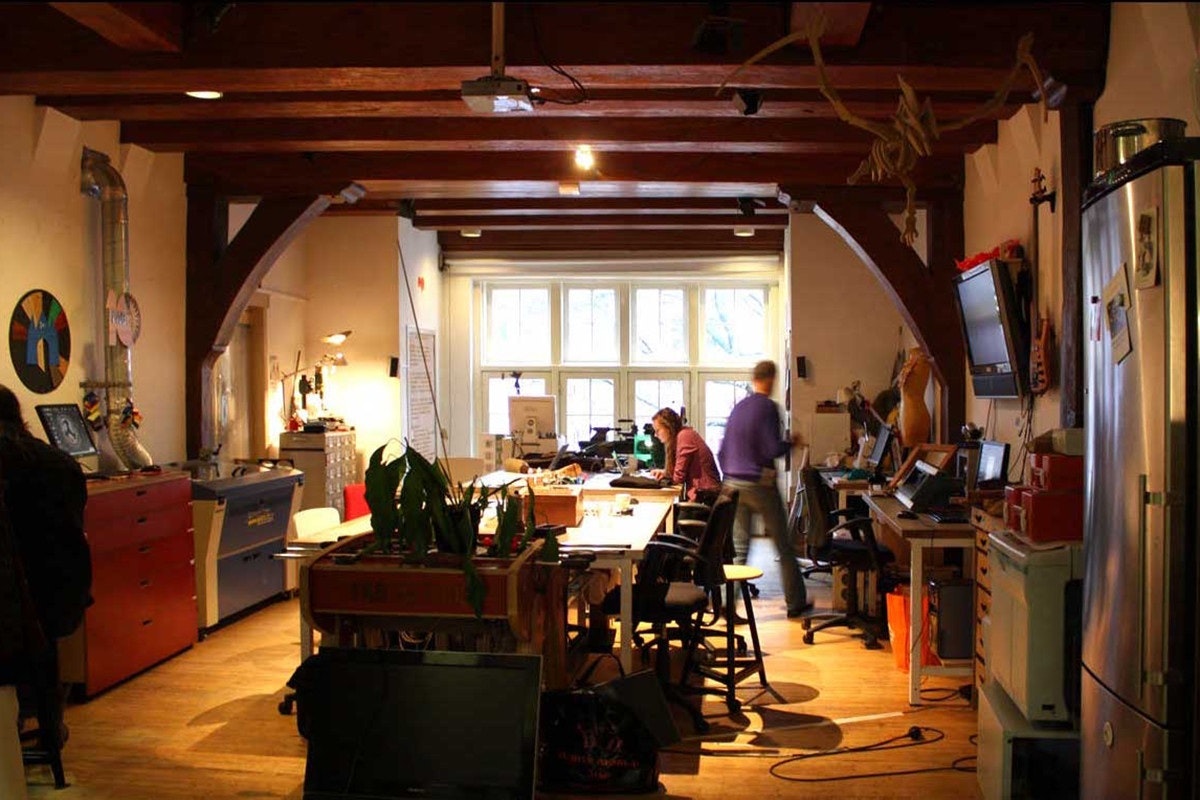
This is the test documentation website for the machines in the lab. In the menu bar above you can find walkthroughs sorted per machine.
Fablab Amsterdam
Open days
During the open Thursdays we explain how the machines work, what you can make with them and what the philosophy is behind the maker movement and digital fabrication. At Fablab Amsterdam we are always looking for critical makers with interesting projects. We are happy to answer any questions or help you find your way in the Amsterdam maker scene, as there is a growing number of so-called ‘Maakplaatsen’ at the public libraries (OBA) in the city where you can make things with digital fabrication.
- The open day is held every week on Thursday from 10:00 to 17:00, except for national holidays and the annual holiday periods (July/August and Christmas). On this day you can pop by with any maker related questions, we can show you around the lab and tell you more about what we do here. Please bear in mind that the size of our Fablab does not make it suitable for group visits.
- During these open days you can use the machines in the lab if:
- you have done any of the Academies (Fab Academy, Fabricademy or BioHack Academy)
- you have followed the maker skills course at Waag for the machine you want to use
- you have been approved for use by us in another way
- Use of the machines is on appointment & depending on availability.
- Please note that we are not open for tours or tourists. The building can be visited during the open monuments day (more information here) or during one of the events on the Waag Open public program (see the agenda here).
Contact
To make an appointment, send us an e-mail at fablab@waag.org. Fablab Amsterdam is situated on the first floor of the Waag monument in Amsterdam.
About Fablabs
A Fablab in 3 words: Make, Share, Learn
Fablabs aren’t machine spaces: fablabs are meeting spaces for people that use the machines in their projects.
Mission
Fablabs are a global network of local labs, enabling invention by providing access for individuals to tools for digital fabrication. A fablab is a platform for learning and innovation: a place to play, to create, to learn, to mentor, to invent. Our Fablab is a member of a global community of learners, educators, technologists, researchers, makers and innovators. Because all fablabs share common tools and processes, the program is building a global network, a distributed laboratory for research and invention.
Access
You can use the fablab to make almost anything (that doesn’t hurt anyone); you must learn to do it yourself, and you must share use of the lab with other uses and users.
Education
Training in the fablab is based on doing projects and learning from peers: you’re expected to contribute to documentation and instruction. Users learn by designing and creating objects of personal interest or import. Empowered by the experience of making something themselves, they both learn and mentor each other, gaining deep knowledge about the machines, the materials, the design process, and the engineering that goes into invention and innovation. In educational settings, rather than relying on a fixed curriculum, learning happens in an authentic, engaging, personal context, one in which students go through a cycle of imagination, design, prototyping, reflection, and iteration as they find solutions to challenges or bring their ideas to life.
- In fablab there’s no linear structure, like theory coming before practice
- In fablabs knowledge is gained through more complex ways. It’s usually along the lines of a hands-on process, fabricating things and understanding after
- Fablabs aren’t spaces where the user wait for the technician help when they find a problem
- The users of a Fablab are active people that help each other, in order to solve their problems. They also document how to solve the problem to help the community
- In Fablabs we don’t use the concept of author, patents or copyrights: we use the philosophy of “open design”, co-creating, learning with the peers, sharing the information with the community, sharing documentation with the network in order to democratize the knowledge and the access to new technologies and archieving a more innovative project
Inventory
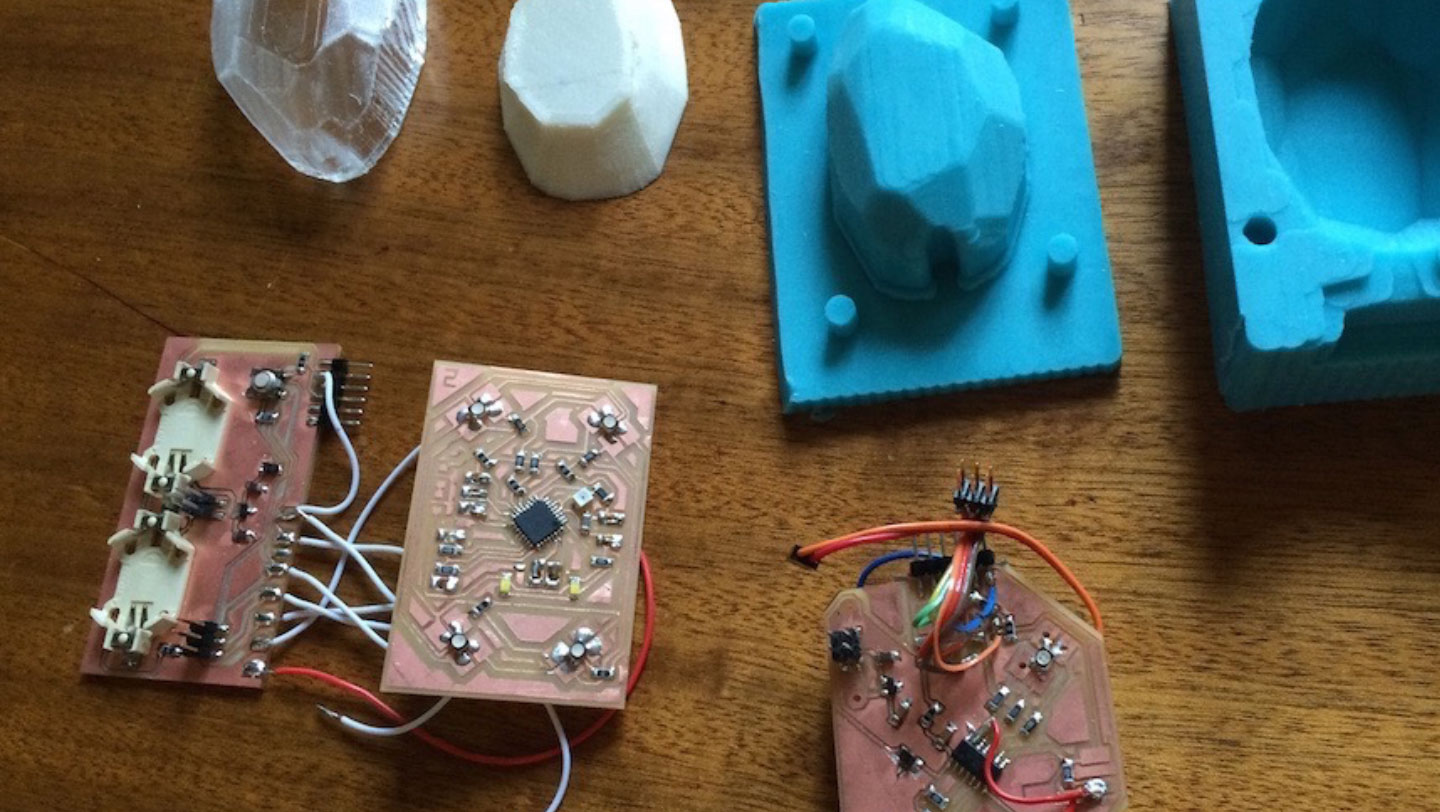
A fablab is comprised of off-the-shelf, industrial-grade fabrication and electronics tools. Currently fablabs include a laser cutter that makes 2D and 3D structures, a sign cutter that plots in copper to make antennas and flex circuits, a high-resolution NC milling machine that makes circuit boards and precision parts, a large wood router for building furniture and housing, and a suite of electronic components and programming tools for low-cost, high-speed microcontrollers for on-site rapid circuit prototyping.
Fab Academy
As support for advanced technical education and to provide a training path for new fablab managers, Fab Academy, an internationally distributed campus for technical education, has emerged from the fablab program. The Fab Academy provides instruction and supervises investigation of mechanisms, applications, and implications of digital fabrication. It is held annually between January and June.
Fab Academy at Fablab Amsterdam from Makers of Waag on Vimeo.
Applications for Fab Academy 2023 are closed. 2024 applications will open on September 1st, so stay tuned!